
.png)
Unequal Scales: Power, Stewardship and the Erosion of Australian Trust
Australians are an extraordinarily patient people.
Most understand that government is complex. They understand that large infrastructure projects can run over budget, that markets rise and fall, and that not every political decision will benefit everyone equally. Most Australians are not demanding perfection from their leaders.
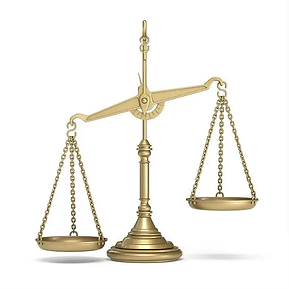
What many are increasingly questioning, however, is something deeper: whether the burdens, risks, and sacrifices being imposed on ordinary citizens are still being shared equally by those who govern them, or are they being weighed with unequal scales.
This growing frustration cannot simply be dismissed as “anti-politics,” envy, or internet cynicism.
The data bears this out. The 2024 Mapping Social Cohesion Report found that only 33 per cent of Australian adults believe the federal government can be trusted to do the right thing by the Australian people all or most of the time, down from 44 per cent in 2021.
The OECD's own country study on Australia, released in 2025, found that the single largest driver of that trust gap is not dissatisfaction with services, but a sense of political voicelessness. Australians who feel that "people like them" have no say in what government does are 52 percentage points less likely to trust the federal government than those who feel they do have a say. That is not cynicism. It is a rational response to a perceived structural reality.
The cost of complying with Commonwealth regulations has risen to $160 billion — 5.8 per cent of GDP, up from $65 billion in 2013, according to "$160bn and Counting: The Cost of Commonwealth Regulatory Complexity" (AICD/Mandala Partners, November 2025).
The Council of Small Business Organisations Australia found that regulatory and compliance obligations now rank among the top five business expenses, with many owners spending more than six hours a week on non-revenue-generating tasks, the equivalent, for a café operator, of losing an entire trading day to paperwork before a dollar of revenue is earned.
Meanwhile, the businesses and individuals bearing those compliance costs watch the same regulatory architecture expand while those designing it remain largely insulated from its consequences. A former minister, by contrast, might spend those same hours across two or three board meetings.
The Cost-of-Living Reality
Against the backdrop of rising mortgages, soaring rents, power price increases, insurance pressures, and declining housing affordability, Australians are being asked to tighten their belts once again.
Young families are delaying home ownership. Retirees are being means tested down to the details of their savings and assets. Small business owners are navigating mounting compliance burdens. Middle-income Australians who attempted to build modest wealth through property or investment are increasingly concerned about future tax and regulatory changes.
The numbers tell a consistent story. Average mortgage repayments for new owner-occupiers have increased by more than 60 per cent since 2021, as interest rate rises compounded against already elevated property prices. Insurance premiums rose an average of 28 per cent between 2022 and 2024, according to the Australian Competition and Consumer Commission. Electricity prices for households increased by an average of 23 per cent between 2022 and 2024, despite repeated government commitments to bring them down. The promise of a $275 reduction in power bills, stated 97 times before the 2022 election, was not delivered.
For many Australians these are not abstract statistics. They are the gap between a business that survives and one that does not. Between a retirement that is comfortable and one that requires selling the family home. Between a young couple who can save a deposit and one that cannot.
At the same time, many observe that those designing and implementing these policies often appear largely insulated from their effects.
This is where the emotional core of the frustration lies.
The concern is not that successful people should not succeed. Nor is it that politicians should live modestly or never accumulate wealth. Australians have generally respected hard work and success.
The deeper concern is whether those exercising power are increasingly protected from the practical consequences of the systems they create for everyone else.
Parliamentary Pensions and Unequal Rules
One issue reigniting public debate is the existence of legacy parliamentary pension schemes established before reforms in 2004.
Under the old Parliamentary Contributory Superannuation Scheme (PCSS), politicians who entered federal parliament before October 2004 and served at least eight years became entitled to a lifetime, indexed pension, payable from the day they left office, regardless of their personal wealth. The minimum pension is set at 50 per cent of the current parliamentary base salary, rising to 75 per cent for those who served 18 years or more, with additional loadings for ministerial and leadership roles. In practice, the maximum any retired federal politician can collect under the scheme is currently around $337,000 per year, while the scheme costs taxpayers around $50 million each year in total outlays to former members.
Crucially, these pensions are not static, they rise every time current MPs receive a pay increase, meaning every salary adjustment for sitting politicians flows directly through to former members still on the old scheme.
Ordinary Australians receiving the Age Pension face a very different set of rules. They are subject to both an income test and a strict assets test. A couple who own their home must have combined assets below $481,500 to qualify for the full Age Pension, and lose access to any pension entirely once combined assets exceed approximately $1,085,000. A single homeowner loses all pension entitlement at around $714,500 in assets. Those thresholds include investments, savings, and household contents — but not the family home itself. For income, a single person can earn no more than around $68,000 per year before losing access to any pension payment at all.
By contrast, a former prime minister or long-serving minister on the old parliamentary scheme can receive a six-figure lifetime pension regardless of their total wealth, other income, or subsequent commercial success. There is no means test (where your income and assets determine what you receive), no asset threshold, and no income taper. The pension continues in full, indexed upward, whether the recipient is living modestly or earning millions in the private sector.
To be clear, these arrangements were lawful, publicly established, and have since been closed to new entrants. Many politicians elected after 2004 are now under standard superannuation accumulation rules broadly comparable to those available to other Australians, receiving employer contributions at 15.4 per cent of salary.
Yet the symbolic effect remains significant.
When Australians struggling with rising costs observe that a former politician can pocket over $250,000 a year in pension income while simultaneously drawing directors' fees, advisory retainers, and investment returns, with no reduction for any of it, while their own neighbour loses the Age Pension because they saved $30,000 too much, it is not hard to understand the resulting frustration.
Whether or not that perception is fully justified in every case, it has real consequences for public trust.
Property, Taxation, and Political Credibility
Housing policy has become another flashpoint, and the May 2026 federal budget has brought it to a head in a way that cuts to the very heart of what this piece is about.
For generations, Australians viewed property ownership not merely as investment, but as stability, independence, and intergenerational security. Increasingly, however, younger Australians feel locked out of that aspiration altogether.
The federal government has now moved to address this, announcing in the 2026–27 budget the most significant reforms to property taxation in a generation: negative gearing for residential property will be limited to new builds from 2027–28, and the 50 per cent capital gains tax discount will be replaced by inflation-adjusted indexation from 1 July 2027, with a minimum 30 per cent tax rate on realised gains.
Those changes are substantive and long-debated. But before examining what they do, it is worth pausing on what was said before they arrived.
The Promise
This is not a case of a government quietly shifting position. It is a documented, emphatic, and repeated reversal.
Before the May 2025 federal election, Labor ruled out changes to negative gearing and capital gains tax on multiple occasions across multiple years. As far back as 2023, official Labor talking points distributed to MPs stated that the party had no plans to change negative gearing rules. In January 2022, then-shadow treasurer Jim Chalmers made clear that Labor would not be taking the same tax increase policies to the next election that it had taken to 2019, specifically including negative gearing.
Those commitments hardened as the 2025 election approached. On 9 April 2025, Albanese was asked directly whether he could rule out any changes to negative gearing and capital gains tax settings if re-elected. His answer: "Yes. How hard is it? For the 50th time."
As recently as August 2025, he told a productivity roundtable that the only tax policy his government was implementing was the one it had taken to the election.
Less than a year later, the May 2026 budget introduced precisely the reforms he had categorically ruled out. Confronted with the reversal, Albanese acknowledged it directly: "We've changed our position. I'm upfront about that. We've changed our position because we're throwing absolutely everything at supply."
That explanation may be genuine. The housing crisis is real, the pressure was building from all sides, and reasonable people can argue the reforms are good policy regardless of the political circumstances. But the manner of the reversal, categorical denials right through an election campaign, followed by implementation within twelve months of winning, is precisely the kind of episode that confirms the worst suspicions of ordinary Australians about the relationship between political promises and political reality.
It is also not the first time this government has done it. Labor ministers repeatedly asserted there were no plans to change the Stage Three tax cuts ahead of the 2022 federal election, before announcing a significant overhaul in 2024. Once is a surprise. Twice begins to look like a method.
The Structural Problem Nobody Is Talking About
But there is a deeper layer to this story than a broken promise, and it goes directly to the pub test this section is about.
All existing investment properties held before 7:30pm on budget night, 12 May 2026, are fully grandfathered, meaning the old, more generous arrangements remain in place for those properties until they are sold. The reform applies to future investors. Those who already hold property portfolios face no change whatsoever to their existing arrangements.
Now consider who those existing property holders are.
Analysis of the 48th Parliament's interests register found that MPs and their families had declared 451 properties. Of 226 members, 135 declared they or their families own two or more properties, and 29 own four or more. Only 16 MPs, 7 per cent, declared owning no property at all. Approximately 94 per cent of federal politicians own at least one property, compared with 67 per cent of Australians as recorded in the 2021 Census.
Grandfathering is standard practice in tax reform, it exists to avoid retrospective unfairness to those who made investment decisions in good faith under the existing rules, and that rationale is legitimate. But when the beneficiaries of that protection are disproportionately drawn from the political class itself, the very people who spent years promising the rules would not change, the optics are difficult to separate from the substance.
The distributional data makes it sharper still. Treasury estimates the CGT discount resulted in $21.8 billion in forgone revenue in 2025–26 across all asset types, with around 83 per cent of that benefit flowing to the top 10 per cent of income earners.
Negative gearing reduced personal income tax revenue by $10.9 billion in 2023–24, projected to reach $12.3 billion in 2024–25. The Reserve Bank's own internal analysis found that almost three-quarters of property investors are in the top 40 per cent of income earners, and the top 20 per cent of income earners receive more than 50 per cent of all negative gearing benefits.
And the benefit is not equal even within that group. A high-income earner on $250,000 saves $4,700 in tax for every $10,000 of rental loss. A public servant on $80,000 saves only $3,200 from identical circumstances on the same property. The more you earn, the more the old system has been rewarding you, and the more valuable the grandfather clause protecting it becomes.
The Pub Test
This is the combination that fails the pub test, not any single element of it, but the accumulation:
A government promises not to touch property tax concessions. It wins an election partly on that promise. It then changes the concessions, but designs the change to protect everyone who already holds property, which disproportionately includes higher income earners, and which includes, at a rate of 94 per cent, its own members. The people who will feel the new rules most are future investors, younger Australians who haven't yet been able to buy in.
Meanwhile, the ordinary Australian trying to save a deposit still faces income tests, asset tests, stamp duty, and a market where decades of favourable tax treatment have compounded prices well beyond wage growth.
None of this is corrupt. The policy may be good. The grandfathering may be economically defensible. The broken promise may be the right call in hindsight. But good intentions do not dissolve the perception that the rules, once again, have been written by people who are already inside them, for people who are already inside them.
That perception does not require proof of wrongdoing. It only requires eyes.
Snowy 2.0 and the Revolving Door Problem
The debate surrounding Snowy 2.0 has amplified many of these concerns.
When the project was announced in March 2017 by then-Prime Minister Malcolm Turnbull, Australians were presented with an ambitious nation-building vision tied to energy security and the renewable transition. Turnbull pitched Snowy 2.0 as a $2 billion pumped-hydro (a method of storing energy using water) expansion that would deliver 2,200 MW of on-demand power generation capacity (Dispatchable capacity). No detailed feasibility study existed at the time of the announcement, the study commissioned to assess the project was not released until December 2017, and when it was, it put the cost at between $3.8 and $4.5 billion, nearly double the headline figure.
Internal warnings that the original estimate was significantly undercooked were set aside. Earlier studies of similar concepts within the Snowy scheme, dating back to the 1980s and 1990s, had examined the idea without advancing it to construction. Turnbull's government pushed it through anyway.
Today the project is heading for a total cost in the vicinity of $42 billion once construction overruns, interest during construction, and the associated transmission infrastructure (such as HumeLink) are included, roughly 20 times the original headline figure.
At the same time, the very same former political leader has since developed two pumped-hydro projects in the Upper Hunter through his family's investment firm, using state-owned reservoirs managed by Water NSW, and sold those projects to AGL Energy in May 2025 for an undisclosed sum.
He has since become President of the International Hydropower Association, the peak global hydropower lobby, and holds a senior advisory role with KKR, the private-equity firm with investments in NSW transmission assets that are receiving federal concessional funding tied to unlocking Snowy 2.0.
Further, Turnbull personally invested in SunDrive Solar, an Australian company developing copper-based solar cell technology. SunDrive has received approximately $39 million in cumulative grants from the Australian Renewable Energy Agency (ARENA), the federal body established and funded under multiple governments, including Turnbull's, for research and development. In 2024, the company applied jointly with Chinese manufacturer Trina Solar for funding under the federal Solar Sunshot program to build a commercial solar manufacturing facility, an application that has not succeeded to date.
The pattern extends beyond renewables. Turnbull now chairs the International Advisory Board of Rohirrim, a US-based AI company whose software uses artificial intelligence to speed up government procurement and defence acquisition processes. The technology is marketed to the US Department of Defense and allies including Australia; Turnbull has publicly stated he is "certainly happy to assist" opening doors, citing chronic delays in Australian defence projects, the very sector he oversaw with record peacetime investment as Prime Minister.
He is also an active investor and adviser in cybersecurity firms including Semperis, Kasada, Dragos and Cato Security. During his term he launched Australia's first National Cyber Security Strategy, backed by more than $230 million across 33 initiatives, and funded bodies specifically designed to stimulate private investment in the sector.
Importantly, none of this is unlawful. Involvement in these industries after politics is not inherently unethical, and each step, the hydro sale, the IHA presidency, the KKR advisory role, the SunDrive investment, the Rohirrim chairmanship and the cybersecurity portfolio, is entirely legal and documented in public records, company filings, media reporting and government announcements.
Yet the cumulative pattern creates broader public unease.
Increasingly, Australians feel they are observing a revolving-door culture in which political influence, corporate interests, public subsidies, advisory networks, and investment opportunities overlap in ways that ordinary citizens could never access.
The concern is not always criminality. More often, it is proximity to power.
And while each individual example, including Malcolm Turnbull's, may be defensible on its own merits, the cumulative effect still damages trust in institutions.
The Snowy 2.0 story involves the intersection of political power and commercial opportunity. The next example sits closer still to the lives of ordinary Australians, in the decisions made about their health. And proximity to power, it turns out, is not confined to politicians.
The Revolving Door in the Health and Regulatory Sphere
Another example of the same dynamic, and in some ways the most personal for ordinary Australians, sits in health and pharmaceutical regulation, where the decisions made during the COVID-19 pandemic touched the daily lives, livelihoods, and bodily autonomy of every person in the country.
For more than a decade, Adjunct Professor John Skerritt AM served as Deputy Secretary of the Health Products Regulation Group in the federal Department of Health and Aged Care, effectively leading the Therapeutic Goods Administration, the body responsible for approving, monitoring, and regulating every vaccine, medicine, and therapeutic good available in Australia. Under Skerritt's leadership, the TGA implemented the Medicines and Medical Devices Review, digital transformation, the regulation of medicinal cannabis, and the rapid registration of COVID vaccines and treatments.
During the pandemic, Skerritt became one of the most recognisable public faces of the regulatory response. He appeared regularly in national media briefings defending the safety and efficacy of approved vaccines, advised ministers on the regulatory framework that underpinned vaccine mandates, workplace requirements, and the public health directions imposed on millions of Australians.
For many Australians, whatever their view of those measures, Skerritt was the face of official assurance. He was the expert at the podium telling them the products were safe, the process was rigorous, and the science was settled.
Skerritt retired from the TGA in April 2023 after more than ten years in the role. Just eight months later, in December 2023, he was appointed as an Independent Selected Director to the board of Medicines Australia, the peak industry lobby group representing the nation's pharmaceutical companies, including the very manufacturers whose COVID-19 vaccines the TGA had approved and whose products it continues to regulate.
The appointment was warmly announced by both parties. Medicines Australia's chair described the role as bringing "strategic leadership, informed by decades of government experience, at a pivotal time for the pharmaceutical industry," and noted that Skerritt's "deep understanding of government, and policy development and implementation, will be invaluable." Skerritt himself called it "a tremendous honour."
The candour of that language is itself instructive, the explicit value being purchased is insider knowledge of how the regulator thinks and operates.
The board positions did not stop there. Skerritt simultaneously holds a salaried Enterprise Professorship in Health Research Impact at the University of Melbourne, where he advises academics on the commercial and policy translation of research portfolios, and an Adjunct Professorship at the University of Sydney.
In October 2025 he was appointed as a paid non-executive director of Wintermute Biomedical, an Australia-American biotech company with treatments currently in medical trials developing investigational antiviral treatments, currently progressing a topical therapy for shingles through Phase II/III trials. Wintermute's Executive Chairman was explicit about why Skerritt was appointed: he "deeply understands the clinical and regulatory pathway on which we are travelling."
He also sits on the board of AusBiotech, Australia's peak biotechnology industry association. Internationally, he chairs the Scientific Advisory Council of the UK-based Centre for Innovation in Regulatory Science, described as a "safe harbour" for policy discussions between global industry leaders, regulators, and health technology assessment bodies, and sits on the board of the Centre for Regulatory Excellence in Singapore.
The cumulative picture is of a former regulator who, within months of leaving office, had assembled a portfolio of paid and advisory roles spanning the peak pharmaceutical lobby, a clinical-stage biotech seeking TGA approval pathways, the peak biotechnology industry association, and two international regulatory science bodies funded substantially by the pharmaceutical industry. Each role is documented. Each is legal. And in each case, the explicit value proposition is the same: decades of experience inside the regulator, and the networks that come with it.
None of this is unlawful. Skerritt's expertise in pharmacology, immunology, and regulatory science is genuine, and the movement of senior officials into industry roles occurs across many democracies. Australia's framework for managing it is, however, notably weak.
For the most part, former public officials face no restrictions on the type of employment they can engage in after leaving the public sector. The Australian Public Service Commission's guidance relies primarily on self-declaration of conflicts during the separation process and agency discretion, there is no statutory cooling-off period preventing a former head of the TGA from joining the pharmaceutical industry's peak lobby group eight months after retirement.
By contrast, the UK's Advisory Committee on Business Appointments scrutinises senior official appointments and can impose waiting periods and conditions. The United States imposes statutory cooling-off periods on senior executive branch officials that restrict lobbying and representation before their former agencies for defined periods after departure. Australia has neither equivalent.
The result is a structural gap that the Skerritt case illustrates clearly. Whatever one's view of the pandemic response itself, and Australians hold a wide range of views on that, the people who lived under the mandates, faced workplace consequences for non-compliance, and were asked to trust official assurances from the regulatory podium are now watching the same regulator collect board fees from the industry he once oversaw.
The financial rewards, professional networks, and commercial opportunities available to Skerritt after his public service are structurally unavailable to the citizens who lived under the rules he helped enforce and the decisions he helped make.
There is no means test on that transition. No cooling-off period that slows it. No independent body that scrutinises it. And no equivalent pathway for the average Australian.
This is not a story of individual corruption. It is a story of institutional proximity, the same story, in a different portfolio, that runs through this entire piece. Like the grandfathered property tax concessions that shield existing parliamentary portfolios, like the indexed parliamentary pensions untouched by assets tests, and like the post-political business ventures of former prime ministers in the sectors their governments subsidised, Skerritt's trajectory is visible, documented, and entirely lawful.
When Australians see the regulator who shaped the most contested public health measures in living memory move swiftly and lucratively into the industry he oversaw, the perception of two systems is not a conspiracy theory. It is a reading of the public record.
The Erosion of Trust and the Perception of Unequal Scales
The problem Australia faces is not simply economic. It is relational.
Healthy democracies depend not merely on laws and procedures, but on something harder to legislate: the shared belief that those entrusted with authority operate under the same moral expectations and practical constraints as the people they govern. That belief, that the rules apply to everyone, that sacrifice is shared, that proximity to power does not grant immunity from consequence, is the invisible infrastructure on which public trust is built.
It is also, once damaged, extraordinarily difficult to repair.
What this piece has tried to document is not corruption. At no point have I suggested that any individual described here has broken the law, acted improperly, or failed to disclose what was required of them. The conduct examined is, in each case, legal, documented, and in many instances entirely defensible on its own terms.
But the cumulative picture matters, and Australians are capable of reading it.
They can see a former prime minister who championed a $2 billion infrastructure project that is now headed toward $42 billion, who has since built a career in the very industries that project empowered, hydro development, transmission investment, international hydropower advocacy, while remaining insulated, like most of his parliamentary generation, from the means-testing that governs the retirement incomes of ordinary Australians.
They can see a parliament in which 94 per cent of members own property, which then spent years promising not to change property tax concessions, broke that promise within twelve months of re-election, and designed the resulting reform to protect every portfolio held on the night the announcement was made, including, overwhelmingly, their own.
They can see a former head of the nation's medicines regulator, the face of official assurance during the most contested public health intervention in living memory, seated on the board of the industry's peak lobby group within eight months of leaving office, with no cooling-off period, no independent scrutiny, and no pathway available to the ordinary Australians who lived under the rules he helped enforce.
They can see a pension scheme that pays former politicians indexed, lifetime incomes regardless of their wealth, while a retired couple who saved too carefully lose their Age Pension over a threshold measured in the hundreds of thousands of dollars.
None of these observations require conspiracy to sustain them. They require only attention.
And that is precisely the problem. The frustration now spreading across Australian public life, crossing party lines, age groups, and ideological leanings, is not the frustration of people who feel deceived by a hidden system. It is the frustration of people who feel deceived by a visible one. The mechanisms are in plain sight. The register of interests is public. The budget papers are published. The parliamentary pension rules are documented. The grandfathering clauses are written into the legislation.
Ordinary Australians can read. And increasingly, what they are reading confirms what they already suspected: that the rules have been written by people who are already inside them, for people who are already inside them, and that the gap between the Australia described in political speeches and the Australia experienced at a kitchen table is not narrowing.
That gap is not inevitable. Other democracies have navigated it, through genuine transparency reforms, meaningful post-political employment restrictions, and the consistent application of the same rules to those who make them as to those who must live by them.
But the first step is honesty about what the gap actually is.
This piece has tried to provide some of that. Whether those with the power to act on it will choose to is, as always, another matter entirely.
A Final Reflection
The concerns documented in this piece ultimately point beyond politics itself.
Those writing from within a Christian tradition will recognise the patterns described here as old ones.
The Hebrew prophets were unsparing on the subject of rulers who arranged the rules to their own advantage.
Isaiah pronounced judgement on those who "enact unjust laws and issue oppressive decrees, to deprive the poor of their rights", and notably, he was speaking of lawmakers specifically, not tyrants. Amos condemned those who imposed levies on the poor while corrupting justice in the courts. Proverbs observed simply that "the Lord detests dishonest scales", an image that resonates when the same rental loss saves a high-income professional nearly fifty per cent more in tax than it saves someone on an average wage. Micah asked what God actually required of those in authority: to act justly, love mercy, and walk humbly.
The New Testament does not soften this.
Jesus observed that the religious leaders of his day "tie up heavy loads and put them on other people's shoulders, but they themselves are not willing to lift a finger to move them." James is direct about the spiritual danger of showing favouritism to the powerful and indifference to the rest. And Luke records Jesus making the foundational principle explicit: "From everyone who has been given much, much will be demanded; and from the one who has been entrusted with much, much more will be asked." Romans reminds us that governing authority is instituted as a servant for the good of those governed, not as a benefit for those who hold it.
So, the concern is something more specific: whether those entrusted with authority over others exercise it with the same constraints, the same accountability, and the same exposure to consequence that ordinary people face. The biblical term for this is stewardship, the understanding that power, like wealth, is held in trust, not owned. And stewardship, in both Testaments, comes with judgement.
Although Australia was founded on Christian principles and values, it is not a theocracy, and this piece does not argue that it should be governed by religious principle. But the instinct that public authority carries moral obligation, not merely legal obligation, is not exclusively Christian. It is the foundation of every civic tradition that has ever produced a functioning democracy. Procedural legality is necessary but not sufficient. A nation may comply with every technical rule while still gradually eroding the moral legitimacy upon which free societies ultimately depend.
What ordinary Australians are expressing, in their frustration with revolving doors, grandfathered tax concessions, indexed political pensions, and broken promises, is not primarily a technical complaint. It is a moral one. They are not asking for perfection.
They are asking a simpler, older question:
Do the people making the rules still genuinely live under them, alongside the rest of us?
When the answer increasingly appears to be no, when the observation is not conspiratorial but simply factual, drawn from public registers and published budget papers, then declining trust should surprise no one.
And if that trust is to be rebuilt, the beginning is not a new policy or a new committee. It is the older and harder thing: leaders who are willing to be genuinely subject to what they ask of others. Who hold power as stewardship, not inheritance. Who understand that authority exercised without accountability is not strength, it is, in the long run, its own undoing.
That is not a new idea. It is, in fact, a very old one.
God bless
Mark.



Comments